Surrey Quays Shopping Centre Floor Cleaning Guide for Retailers
If you run a shop, kiosk, or unit in Surrey Quays, you already know floor care can make or break the feel of a retail space. This Surrey Quays shopping centre floor cleaning guide for retailers is here to help you keep surfaces safer, cleaner, and better presented without turning maintenance into a daily headache. Busy entrances, constant footfall, spilled drinks, wet-weather grime, and stock movement all leave a mark. A good floor cleaning routine does more than improve appearance; it supports customer confidence, staff safety, and the life of your flooring. Let's get into what works in a real shopping-centre setting, not just in theory.
Table of Contents
- Why floor cleaning matters in Surrey Quays retail spaces
- How the cleaning process works
- Key benefits and practical advantages
- Who this guide is for
- Step-by-step guidance
- Expert tips for better results
- Common mistakes to avoid
- Tools, resources and recommendations
- Law, compliance and best practice
- Options and comparison table
- Case study / real-world example
- Practical checklist
- Conclusion
- Frequently asked questions
Why Surrey Quays Shopping Centre Floor Cleaning Guide for Retailers Matters
Retail floors take a beating. That sounds obvious, but the scale of it is easy to underestimate until you stand back at closing time and see what the day has done. Grit from the pavement, salt in winter, sticky drink spills, cardboard dust, rubber marks from trolleys, and muddy shoeprints all build up fast. In a shopping centre environment, customers notice everything. A scuffed or dull floor can quietly drag down the whole impression of the store, even if the stock, lighting, and displays are spot on.
For retailers in Surrey Quays, floor cleaning also has a practical side. Clean floors are less slippery, easier to maintain, and less likely to suffer long-term damage. That matters whether you have vinyl, tile, sealed concrete, laminate, carpet tiles, or a mixed-floor unit. Once dirt is ground in, cleaning becomes harder and more expensive. Regular care helps you avoid that "we'll sort it later" trap, which, to be fair, often ends up costing more than the original problem ever would have.
There is also a customer-experience angle. A clean entrance zone sets the tone in seconds. People walking in from a busy mall corridor tend to make a snap judgement before they even reach the till. Floors are part of that judgement. Quietly, they say a lot.
Expert summary: In retail, floor cleaning is not just housekeeping. It is presentation, safety, asset care, and customer experience rolled into one very practical routine.
How Surrey Quays Shopping Centre Floor Cleaning Guide for Retailers Works
The cleaning approach depends on floor type, traffic levels, opening hours, and the kind of mess you deal with most often. There is no single magic method, which is probably why so many businesses end up with half-finished routines. A better system starts with assessing the floor, choosing the right method, and keeping the schedule realistic.
In a shopping centre retail unit, most floor cleaning plans work across three layers:
- Daily maintenance: sweeping, vacuuming, mopping, spot cleaning, and entrance mat checks.
- Periodic deep cleaning: machine scrubbing, extraction, or specialist treatment depending on the material.
- Restorative care: stain removal, polishing, or professional cleaning when the floor has lost its finish or picked up embedded dirt.
If your store has carpeted areas, you may need methods such as commercial carpet cleaning or steam carpet cleaning for deeper soil removal. Hard floors, meanwhile, usually respond better to neutral cleaners, microfibre systems, and controlled machine cleaning rather than aggressive chemicals. The wrong product can leave a slippery residue or dull the finish. That is the sort of thing people only notice after the floors dry and someone nearly slides across them. Not ideal.
A sensible process usually begins with dry soil removal first. You get the loose grit up before it can turn into abrasive paste. Then you move to damp or wet cleaning. On busy trading days, a small spill response kit near the front or till area can save a lot of trouble. It really can be that simple.
Key Benefits and Practical Advantages
There are plenty of reasons to keep on top of floor cleaning, but in retail the benefits are especially visible.
- Better first impressions: Customers notice a crisp, well-kept floor immediately.
- Reduced slip risk: Clean, dry, well-maintained floors are less likely to cause avoidable incidents.
- Longer floor life: Dirt and grit wear down finishes, especially in entrances and queue areas.
- Lower maintenance costs: Regular cleaning is usually cheaper than emergency restoration.
- Improved staff morale: Teams tend to work better in a tidy environment. It just feels calmer.
- Less visible wear: Marks, smears, and footfall patterns are less likely to dominate the look of the store.
There is a softer benefit too: a clean store feels easier to trust. If a shopper sees attention to detail on the floor, they often assume the rest of the operation is handled with the same care. It is a small thing, but retail runs on small things.
For stores that carry cushions, display seating, or soft furnishings near the entrance, fabric care can also matter alongside floor cleaning. Supporting services such as upholstery cleaning and sofa cleaning help keep the whole front-of-house area coherent rather than only the floor looking sharp while everything else looks tired.
Who This Is For and When It Makes Sense
This guide is for retailers operating inside or around Surrey Quays shopping centre who want a more reliable approach to floor maintenance. That includes fashion stores, convenience shops, beauty retailers, electronics stores, small cafes with customer-facing floors, pop-up units, and any business where foot traffic is constant and presentation matters.
It also makes sense if you are dealing with one of these situations:
- floors that look dirty again within hours of cleaning
- recurring marks near the entrance or tills
- complaints about sticky or slippery areas
- carpet tiles that look patchy or worn
- hard floors that have lost their shine
- a move from basic daily cleaning to a more structured maintenance plan
If you are fitting out a new unit, or refreshing an older one, it is worth thinking about maintenance early. A floor that is easy to clean will save time every single week. That is not glamorous, admittedly, but it is the kind of detail that quietly protects profit margins.
And if you are comparing options for specialist help, service information such as pricing and quotes can be useful when you are building a cleaning budget, while health and safety policy details matter when you need to align cleaning with site rules and internal procedures.
Step-by-Step Guidance
Here is a practical way to build a floor cleaning routine that actually survives a busy retail week.
1. Identify the floor types in your unit
Start by listing what you have: tile, vinyl, carpet tiles, laminate, sealed stone, or a combination. Each surface needs different products, moisture levels, and tools. A one-size-fits-all approach is where problems start.
2. Map the highest-traffic zones
Entrance mats, till points, queue lanes, fitting-room routes, staff entrances, and stock corridors usually get the most wear. These areas need more frequent attention than low-traffic corners. In practice, it is often the first three metres inside the door that do most of the heavy lifting.
3. Remove dry soil before wet cleaning
Sweep, dust mop, or vacuum first. If you skip this step, wet cleaning just spreads grit around. You end up polishing dirt, which sounds efficient until you see the results. Not great.
4. Treat spots and spills quickly
Fresh spills are much easier to remove than set-in marks. Blot, lift, and use the correct spot treatment for the material. Never scrub a spill aggressively at the start; that often pushes it deeper or spreads it wider. For stubborn marks, a dedicated stain removal approach is usually safer than improvising with whatever cleaner is nearest.
5. Use the correct cleaning method for the material
For hard floors, use the manufacturer-recommended cleaning solution and the right dilution. For carpets or rugs, use the extraction or steam method only where appropriate. A good rule: if you are unsure, test a hidden area first. Yes, it is a small delay. It can save a big mess.
6. Let the floor dry properly
A floor that is technically clean but still damp can cause slips and re-soiling. Use airflow where possible, manage access, and avoid reopening a space too soon. This is especially important during wetter London days when everyone brings in a bit of the outside with them.
7. Record what was done
A simple log helps you spot patterns. If one area needs repeated attention, you can adjust the frequency or method. Managers often say they "knew something was off" but had no record. A log takes the guesswork out.
Expert Tips for Better Results
After a while, floor care becomes less about cleaning and more about reducing friction. The smoother your routine, the less you need to think about it.
- Use entrance matting properly: Matting is only useful if it is large enough and kept clean. A dirty mat is just a dirt reservoir with branding on it.
- Clean little and often: Frequent light cleaning is better than letting dirt build up for a heroic weekend scrub.
- Choose neutral chemistry where possible: Harsh products can damage finishes or leave residue.
- Work from clean to dirty: It sounds basic, but traffic flow in a shop can be messy. Set a route and stick to it.
- Don't ignore corners and edges: That is where grime tends to gather first. You notice it most when sunlight catches it at about 4pm.
- Use microfiber correctly: It picks up fine dust well, but only if it is washed and maintained properly.
If you have soft seating, display fabrics, or decorative rugs in customer areas, it can help to coordinate floor cleaning with rug cleaning and curtain cleaning where relevant. It keeps the whole unit looking intentional rather than a bit tired at the edges. We've all seen that look.
One small but useful habit: inspect the floor after the lights are turned up and the shop is quiet. Dust, smears, and dull patches show themselves differently in evening lighting. You catch things then that you miss in the morning rush.
Common Mistakes to Avoid
A lot of floor damage in retail is not caused by big incidents. It comes from small habits repeated over and over.
- Using the wrong product: Especially on sealed floors, where residue or over-wetting can create trouble.
- Skipping dry debris removal: That turns dirt into abrasion.
- Leaving spills until later: By then, the stain has settled and the surface may already be compromised.
- Over-wetting carpets or joints: This can slow drying and encourage odours or edge damage.
- Ignoring entrance areas: Most of the visible soil enters there, so these zones need the most attention.
- Cleaning without checking site requirements: Shopping centres often have their own procedures, access rules, and timing expectations.
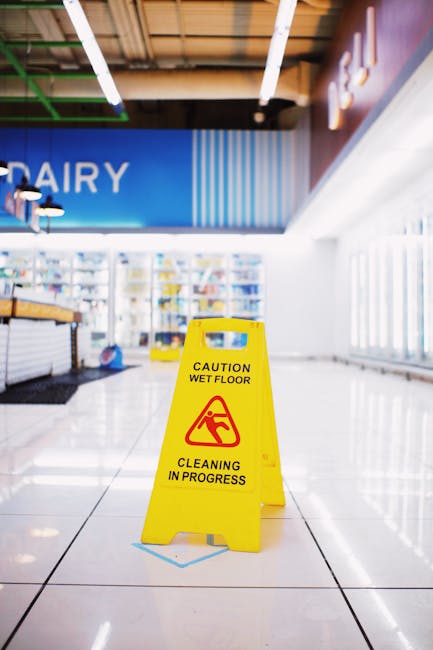
One thing retailers often overlook is cleaning during trading hours without proper signage or control. A mopped floor with no warning is an avoidable risk. It sounds obvious after the fact, of course. That's the funny thing about floor safety: it only feels basic once somebody has pointed it out.
Another mistake is assuming every mark is a floor mark. Sometimes the issue is transfer from shoe soles, display fittings, or packaging. Diagnosing the source saves time and often reduces unnecessary chemical use.
Tools, Resources and Recommendations
You do not need a warehouse full of equipment to keep retail floors in good condition. You do need the right basics, and you need to maintain them.
| Tool or resource | Best use | Practical note |
|---|---|---|
| Dust mop or dry mop | Daily removal of grit and dust | Ideal before any wet cleaning step |
| Vacuum with hard-floor setting | Edges, carpeted entries, and textured surfaces | Useful where loose debris builds quickly |
| Microfibre mop system | Controlled damp cleaning | Helps reduce residue and over-wetting |
| Neutral floor cleaner | Most sealed hard floors | Safer than strong alkaline products in many retail settings |
| Spot treatment kit | Fresh spills and isolated marks | Keep it accessible, not buried in a storeroom |
| Floor machine or scrubber dryer | Periodic deep cleaning | Useful for larger units or heavy footfall |
For many retailers, the best "resource" is actually a cleaning schedule that is simple enough to follow under pressure. If the store is busy on a Friday evening, the plan still needs to make sense. Overcomplicated checklists get skipped. Human nature, really.
When you need specialist support, it is sensible to choose a provider with clear information on insurance and safety, transparent terms and conditions, and a straightforward route for enquiries through contact us. Those details do not clean the floor, obviously, but they do tell you a lot about how organised the service is.
Law, Compliance, Standards, or Best Practice
Floor cleaning in a retail unit does not sit in a vacuum. In the UK, businesses are expected to manage workplace safety sensibly, keep floors reasonably clean and free from avoidable hazards, and follow site-specific requirements. You do not need to turn every mop-up into a legal thesis, but you do need a sensible system.
For shopping centre retailers, best practice usually includes:
- clear responsibility for cleaning tasks
- documented routines for daily and periodic maintenance
- signage or temporary controls during wet cleaning
- staff awareness of spill response
- safe use and storage of chemicals
- appropriate training for any machine-based cleaning
If your unit sits within a managed centre, the landlord or centre operator may also set rules around access times, noise, waste disposal, and cleaning methods. These are not always complicated, but they do need checking. It is one of those admin jobs that pays back quickly.
Environmental responsibility matters too. Using the right amount of product, avoiding unnecessary waste, and disposing of dirty water correctly are part of a more sustainable routine. If that matters to your business, you may want to review recycling and sustainability information alongside your cleaning plan.
For service providers and retailers alike, trust signals matter. Pages such as about us can help you understand who you are dealing with, while an accessibility statement is useful if you need to check whether online information is easy to use for all staff members. Small detail, yes, but these things often reflect wider professionalism.
Options, Methods, or Comparison Table
Choosing the right method depends on your floor type, budget, and how disruptive the work can be during trading hours. Here is a simple comparison.
| Method | Best for | Advantages | Limitations |
|---|---|---|---|
| Dry sweeping / vacuuming | Daily maintenance | Fast, low disruption, removes loose grit | Won't remove set-in stains or deep soil |
| Damp mopping | Sealed hard floors | Good for routine cleaning and smears | Can leave residue or moisture if rushed |
| Machine scrubbing | High-traffic hard floors | More thorough, consistent finish | Needs equipment and trained use |
| Extraction cleaning | Carpeted retail zones | Helps lift embedded soil and odour | Requires drying time |
| Steam cleaning | Appropriate carpet and textile surfaces | Deep clean potential with minimal chemical use in some cases | Not suitable for every material |
If you only need a light maintenance approach, daily attention and spot cleaning may be enough. If your flooring is already dull, patchy, or holding grime in the texture, you may need a deeper intervention. A good rule is to match the method to the problem, not the other way round.
For soft surfaces close to the customer area, supporting treatments like pet stain odour removal may sound niche, but they can matter in mixed-use spaces, pet-friendly retail formats, or units with scent-sensitive fabrics. Not every shop needs it, but some do. And when they do, it needs doing properly.
Case Study or Real-World Example
Here is a realistic scenario. A medium-sized retailer in a Surrey Quays shopping centre has a tiled entrance, vinyl sales floor, and a small carpeted fitting area. For months, the team relied on ad hoc mopping and "best effort" vacuuming. The entrance kept going grey by midweek, and one corner near the till started showing sticky residue that attracted more dirt. Classic cycle.
The fix was not dramatic. They introduced a very plain routine:
- dry soil removal before opening and again late afternoon
- spot treatment for spills within minutes, not hours
- weekly machine cleaning for the main traffic zone
- fortnightly attention to carpeted sections
- a simple log for repeated marks
Within a short period, the floor looked more even, the entrance stayed presentable longer, and staff spent less time fighting the same patches over and over. No miracle, just better discipline. The store also realised that the carpeted fitting area needed more than a quick hover; pairing the routine with carpet cleaning and occasional steam carpet cleaning helped stabilise the appearance across the whole unit.
The best part? The manager said the store felt calmer. Cleaner floors change the rhythm of a space more than people expect.
Practical Checklist
Use this as a quick working checklist for your retail unit.
- Identify every floor type in the store
- Mark the highest-traffic zones
- Remove loose debris before wet cleaning
- Keep spill kits accessible
- Use the right product for the floor surface
- Avoid over-wetting, especially near edges and joins
- Allow proper drying time before reopening the area
- Log repeated stains, scuffs, or problem spots
- Review entrance matting regularly
- Schedule deep cleaning before visible build-up becomes obvious
- Check centre rules or access windows before large cleaning jobs
- Coordinate floor care with other customer-area fabrics where needed
If you can tick most of those boxes consistently, you are already ahead of many retail units. Honest truth, that consistency is where the win is.
Conclusion
A strong floor cleaning routine in Surrey Quays is not about making the store look pristine for five minutes and then slipping back into chaos. It is about building a simple, repeatable system that protects your presentation, reduces risk, and keeps your flooring in better condition for longer. The best results usually come from a mix of daily attention, occasional deep cleaning, and a realistic understanding of what your floor faces every day.
Start with traffic zones, choose the right method for each surface, and keep an eye on the small things: grit at the entrance, spills near tills, drying times, and the condition of mats. That is where the difference usually lives. If you get that right, the rest feels much easier.
Get a free quote today and see how much you can save.
Frequently Asked Questions
How often should a retailer clean floors in Surrey Quays shopping centre?
Most retail units need some form of daily floor maintenance, with higher-traffic areas often needing attention more than once a day. Deep cleaning is usually scheduled less often, depending on the surface and footfall.
What is the best floor cleaning method for busy retail entrances?
For busy entrances, dry soil removal first is essential, followed by the right damp or machine cleaning method for the surface. Entrance mats make a big difference too, provided they are kept clean.
Can I use the same cleaner on vinyl, tile, and carpet?
Usually, no. Different materials need different products and methods. A cleaner that works well on sealed tile could leave residue on vinyl or damage carpet fibres. Always check the surface type first.
Is steam cleaning suitable for retail floors?
It can be suitable for some carpeted or textile surfaces, but not all floors should be steam cleaned. The material, backing, and drying time all matter. If in doubt, test or seek specialist advice.
What should I do about spillages during trading hours?
Deal with them quickly, isolate the area if needed, and use the correct spot treatment for the floor type. Fast action reduces staining and helps avoid slip hazards.
How do I stop floors from looking dirty so quickly?
Focus on grit removal, entrance matting, and more frequent cleaning in high-traffic zones. Often, the problem is not the whole floor, just one or two heavy-use areas near the door or tills.
Do shopping centres have rules about floor cleaning?
Often they do. Managed centres may have access times, noise restrictions, cleaning procedures, or waste handling expectations. It is worth checking before scheduling major work.
Should retailers keep a cleaning log?
Yes, that is usually a sensible idea. A log helps you spot recurring issues, prove a maintenance routine, and avoid guessing when something was last cleaned.
What if my retail floor has lost its shine?
That can mean the finish is worn, residue has built up, or the floor needs restorative cleaning rather than routine mopping. Sometimes the answer is a deeper clean; sometimes it is a product reset.
Are specialist commercial cleaning services worth it?
They can be, especially if your team is spending too much time chasing stains or if the floor needs equipment you do not have on site. A professional service can be more efficient for periodic deep cleaning.
How can I check whether a cleaning provider is trustworthy?
Look for clear information on safety, insurance, pricing, terms, and company background. Pages such as insurance and safety and terms and conditions can help you judge how organised and transparent a provider is.
What is the simplest daily floor routine for a small shop?
A simple routine is often best: sweep or vacuum, spot-clean spills, damp mop appropriate hard floors, check entrance mats, and do a final visual inspection before closing. Simple, but it works when done consistently.
Where can I ask about commercial cleaning support?
If you want to discuss services or ask practical questions about your unit, use the site's contact us page. It is the most straightforward next step when you are comparing options or planning a clean.